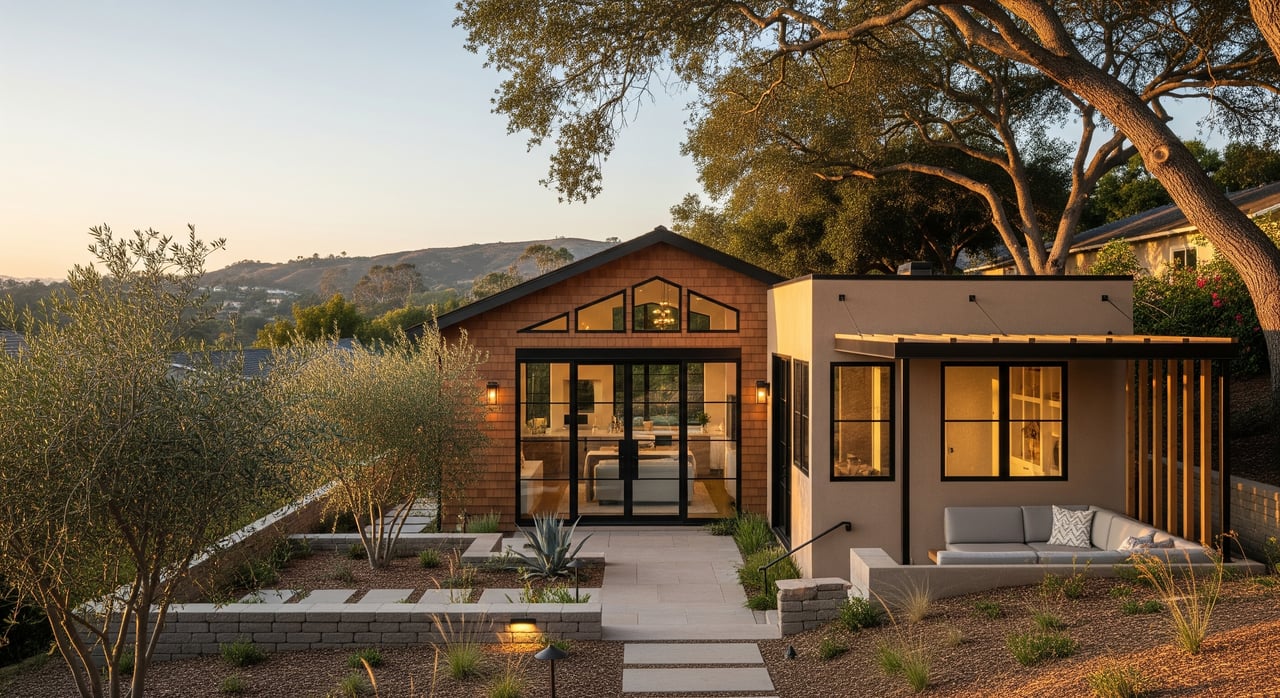
Thinking about adding an accessory dwelling unit to your Poway property, but not sure where to start? You are not alone. Many homeowners want extra space for family or steady rental income, yet permits, costs, and timelines can feel confusing. In this guide, you will learn the essentials to plan your ADU with confidence, from approvals to budgets and ROI. Let’s dive in.
What counts as an ADU in Poway
An ADU is a secondary home on the same lot as your main house. Common types include garage conversions, attached additions, and new detached units. There is also a junior ADU, or JADU, which is typically 500 square feet or less and created within existing living space. JADUs have more limited features, so confirm what is allowed for your layout and utilities before you design.
ADUs in Poway must follow California’s ADU laws and local standards. State rules set the baseline and protect your right to build when you meet objective criteria. For a helpful overview, review the California Department of Housing and Community Development’s ADU resources on HCD’s website, and the state statute in California Government Code section 65852.2.
Why Poway homeowners build ADUs
- Multigenerational living or caregiver housing without moving.
- Long-term rental income, or flexible space for guests and work.
- Potential to increase property value and add resale appeal.
If you are considering short-term rentals, confirm Poway’s current rules and any licensing requirements before you proceed. Policies can change, so verify details directly with the city.
Permits and who to contact
Most compliant ADUs are approved ministerially, which means staff use objective standards and no public hearing is required. You will work mainly with the City of Poway Planning and Building divisions for zoning and building permits. Start with the city’s resources and permit counter on the City of Poway website for checklists and fee guidance.
Depending on your site, you may also need:
- Septic review through the San Diego County Department of Environmental Health if your property is not on sewer.
- Utility coordination with SDG&E and your water provider for meter capacity and service upgrades.
- Fire, grading, drainage, or stormwater reviews tied to site conditions.
What the approval process looks like
- Planning review confirms setbacks, height, lot coverage, size limits, and parking rules.
- Building permits cover structural plans, electrical, plumbing, mechanical, and Title 24 energy compliance, plus CALGreen requirements.
- Submittal packages typically include a site plan, floor plans and elevations, structural details, energy documents, and utility information.
Typical timelines
Every project is unique, but a common sequence looks like this:
- Pre-application or intake: 1 to 4 weeks.
- Plan preparation and revisions: 2 to 8 weeks, depending on your designer and completeness.
- City plan check and resubmittals: often 4 to 12 weeks for a complete set.
- Construction: 3 to 9 months, with garage conversions on the shorter end and new detached builds on the longer end.
Build in buffer time for resubmittals and inspections so your schedule stays realistic.
Key design rules to verify early
- Size: Local ordinances set maximum sizes, and state law provides baseline rights for ADUs. Many cities cap detached ADUs around 1,200 square feet, but you should confirm Poway’s specific limits.
- Setbacks, height, and lot coverage: These vary by lot and zoning. Confirm early to avoid costly redesigns.
- Parking: State law limits when cities can require parking for ADUs, especially near transit and for certain conversions. Review HCD’s guidance and verify Poway’s standards with planning staff.
What it costs to build an ADU in Poway
Your budget will depend on scope, finishes, site work, and utility needs. In the Poway and greater San Diego market, typical ranges are:
- Garage or interior conversion: about 40,000 to 150,000.
- Attached ADU addition: about 120,000 to 300,000 or more.
- Detached new-build ADU: about 150,000 to 400,000 or more, with complex sites and high-end finishes adding cost.
Cost components to expect
- Soft costs: design and architectural fees, structural engineering, energy calculations, permit plan check and inspections, utility and impact fees.
- Hard costs: foundation, framing, roofing, windows and doors, insulation, interior finishes, kitchen and bath fixtures, HVAC, plumbing, and electrical.
- Site costs: grading, retaining walls, driveway or parking work, landscaping, drainage, and any tree protection.
- Utility upgrades: sewer laterals, new water meters or main extensions, electric service upgrades, and gas line extensions.
- Contingency: set aside 10 to 20 percent for unknowns and code-driven changes.
Cities charge building permit fees and, in some cases, impact fees. Some jurisdictions reduce or waive certain impact fees for smaller ADUs, often under 750 square feet. Check Poway’s current fee schedule on the city’s website before you finalize your budget.
How Poway’s site conditions affect costs
- Slope and grading can add engineering and retaining wall expenses.
- Defensible space and fire-safe materials may apply in wildland-urban interface areas.
- Septic system upgrades can be significant if sewer is not available.
Ways to finance your ADU
- Cash or savings, including staged construction.
- Home equity line of credit or home equity loan.
- Construction or renovation loans from a lender that understands ADUs.
- Loans that follow Fannie Mae and Freddie Mac guidance may consider ADU income. FHA and VA can apply in some cases. Confirm your options with a lender early.
Local or state incentive programs sometimes appear, so check current offerings through city or county housing programs.
Estimating ROI the smart way
To evaluate the numbers, gather a realistic build budget that includes soft costs and a contingency. Then estimate expected rent, operating expenses, vacancy allowance, and financing costs. Do not forget to factor in an increase in assessed value and associated property taxes.
Simple metrics to use
- Gross rent yield: annual gross rent divided by total project cost.
- Net operating income: annual rent minus operating expenses and vacancy.
- Payback period: total project cost divided by annual net cash flow.
- Cap rate: net operating income divided by total project cost.
Example math to illustrate
- Total build cost: 200,000
- Monthly rent: 2,200, or 26,400 per year
- Operating expenses and vacancy: 30 percent of gross, or 7,920
- Net operating income: 18,480
- Simple payback without financing: about 10.8 years
Use current Poway rent levels and your actual budget to refine the math. Finishes, privacy, parking, and amenities influence achievable rent.
Common pitfalls to avoid
- Submitting incomplete plans, which leads to resubmittals and delays.
- Underestimating utility work, including sewer laterals and electric service upgrades.
- Overlooking easements and setbacks that limit where a detached ADU can go.
- Assuming septic capacity is adequate when it may require an upgrade.
- Ignoring HOA covenants and conditions. State law limits bans, but CC&Rs may impose requirements.
- Hiring the lowest bid without checking licenses, insurance, and ADU experience.
Poway site checks to do first
- Verify sewer versus septic status and capacity. If on septic, contact the San Diego County Environmental Health team early.
- Map setbacks, easements, slope, and access to understand buildable area.
- Review fire access and defensible space requirements for your neighborhood.
- Call SDG&E and your water provider to confirm service capacity and likely fees.
Your step-by-step ADU checklist
- Review city handouts and speak with the City of Poway Planning and Building divisions about your lot and goals.
- Confirm CC&Rs and HOA rules, if applicable.
- Verify utilities and septic or sewer path early to avoid surprises.
- Engage an ADU-savvy architect or designer, plus a structural engineer when required.
- Get multiple contractor bids and compare scope, schedule, and allowances.
- Build a realistic budget that includes soft costs and a contingency.
- Plan your timeline with space for plan check cycles and inspections.
Ready for guidance tailored to your property
An ADU can be a smart move in Poway if you plan it with clear numbers and an accurate read on your site. If you want help evaluating ROI, sequencing design and permits, or connecting with experienced local pros, reach out to a trusted advisor who understands both construction and real estate. Start your plan with Lydia Buchanan.
FAQs
What permits do I need for an ADU in Poway?
- You will need planning review for zoning compliance and a building permit that covers structural, electrical, plumbing, mechanical, and Title 24 energy compliance, with possible fire, grading, or utility approvals depending on site conditions.
How long does it take to approve and build a Poway ADU?
- Plan for 1 to 4 weeks for intake, 2 to 8 weeks for design and revisions, 4 to 12 weeks for city plan check, and 3 to 9 months for construction, depending on scope and completeness.
How much does a Poway ADU cost to build?
- Typical ranges are about 40,000 to 150,000 for garage or interior conversions, 120,000 to 300,000 or more for attached additions, and 150,000 to 400,000 or more for detached new builds in the Poway market.
Do Poway ADUs require extra parking?
- State law limits when cities can require parking for ADUs, especially for conversions and units near transit; confirm Poway’s current standards with planning staff to see if parking is required for your site.
Can I build an ADU on a Poway property with septic?
- Yes, but you must confirm septic capacity and may need an upgrade; coordinate early with the San Diego County Department of Environmental Health for approvals.
Who should I contact first to start my ADU project?
- Begin with the City of Poway Planning and Building divisions for checklists and feasibility questions, then consult SDG&E and your water provider about service capacity and fees, and engage an ADU-experienced designer and contractor.